Beshbarmak is one of the best-known traditional dishes of Central Asia. Its name is commonly translated as “five fingers,” reflecting the traditional way of eating the dish by hand. At its heart, Beshbarmak combines tender boiled meat, wide pieces of handmade dough, and onions softened in a rich broth.
What Is Beshbarmak?
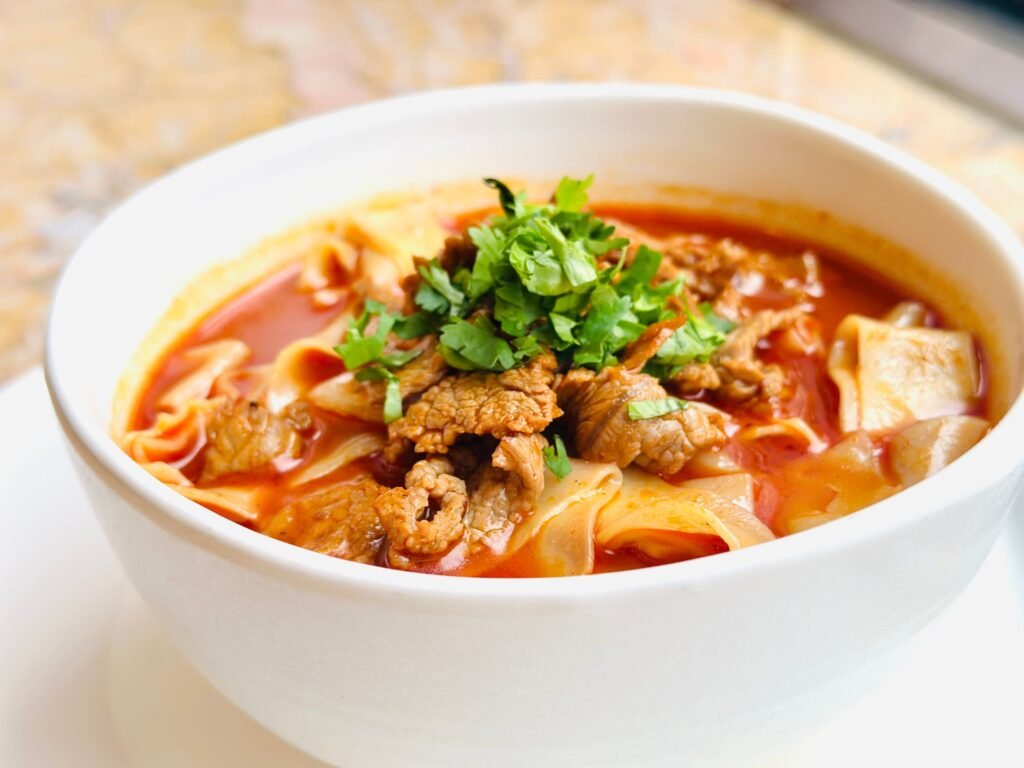
Beshbarmak is a celebratory meat-and-noodle dish associated especially with Kazakh and Kyrgyz cuisine. It is usually prepared with lamb, beef, or horse meat, although the exact ingredients and cooking methods vary by family and region. The meat is simmered until tender, while the dough is cut into broad squares and cooked in the flavorful broth.
The Meaning Behind the Name
The name refers to eating with the fingers rather than using utensils. This tradition highlights the dish’s communal character: Beshbarmak is typically served on a large shared platter and enjoyed during gatherings, holidays, weddings, and important family occasions.
Origins and Nomadic Food Culture
Beshbarmak developed within the food traditions of Central Asian nomadic communities. Meat, flour, onions, and broth were practical ingredients that could provide nourishment in a demanding climate and support large gatherings. The dish also reflects the importance of hospitality, where offering generous portions of meat is a sign of respect.
Cultural Significance
More than an everyday meal, Beshbarmak carries social meaning. Preparation is often shared among family members, and serving customs can communicate honor and hospitality. In many homes, the best cuts of meat are reserved for respected guests or special events.
How Beshbarmak Is Served
The cooked dough is arranged on a platter and topped with sliced meat and onions. A clear broth, sometimes called sorpa, may be served separately or alongside the main dish. Fresh herbs and black pepper can add brightness without overpowering the broth.
Final Thoughts
Beshbarmak brings together simple ingredients, careful cooking, and a strong sense of community. Learning about its history makes the dish even more meaningful, whether you enjoy it at a traditional celebration or prepare a home-style version in your own kitchen.