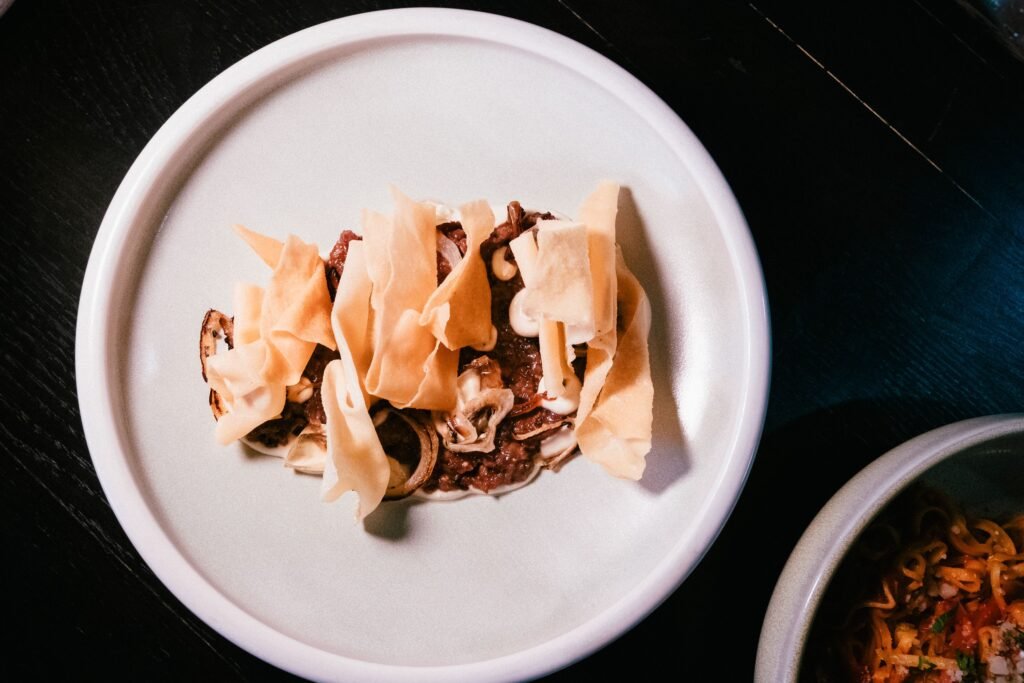
Beshbarmak is a hearty dish made with meat, dough, onions, and broth. Its nutritional profile depends on the type and amount of meat used, the size of each portion, and how much fat is retained in the broth.
Main Nutritional Components
Meat provides protein, iron, zinc, and vitamin B12. Dough contributes carbohydrates that provide energy, while onions add flavor, small amounts of fiber, and plant compounds. The broth contributes fluid and minerals, especially when made with bones and vegetables.
Calories in Beshbarmak
There is no single calorie count for every bowl of Beshbarmak. A serving with fatty lamb or horse meat and a generous amount of dough will contain more calories than a smaller serving made with lean beef. Portion size and added fat are the most important factors.
How to Make a Lighter Version
- Choose lean beef or trim visible fat from lamb.
- Chill the broth and remove some solidified fat before reheating.
- Use a moderate portion of dough and increase the meat-and-onion balance.
- Add herbs or a fresh salad for more contrast and volume.
- Serve broth in a small bowl rather than adding excessive amounts to the platter.
Protein and Satiety
The meat and dough combination makes Beshbarmak satisfying. Protein can help support fullness, while carbohydrates provide energy. Because the dish is dense, a moderate portion can be enough for a complete meal.
Sodium and Seasoning
The sodium level depends on how much salt is added to the cooking water and broth. Season gradually and taste before serving. Pickled side dishes may add additional sodium, so balance them with fresh vegetables.
Food Safety Considerations
Cook meat thoroughly, keep the broth hot during service, and refrigerate leftovers promptly in shallow containers. Reheat leftovers until steaming hot, and avoid leaving cooked meat and dough at room temperature for extended periods.
Allergies and Dietary Adaptations
Traditional dough usually contains wheat and may contain eggs, so it is not suitable for people with wheat or egg allergies unless adapted. A gluten-free dough can be tested, but its texture may differ from the traditional version. Anyone with a medical dietary requirement should choose ingredients with appropriate professional guidance.
A Balanced Way to Enjoy Beshbarmak
Beshbarmak can fit into a balanced eating pattern when enjoyed in a sensible portion alongside vegetables and lighter sides. Its nutritional value is shaped by the ingredients and preparation choices, so small adjustments can make the meal more suitable for different preferences.