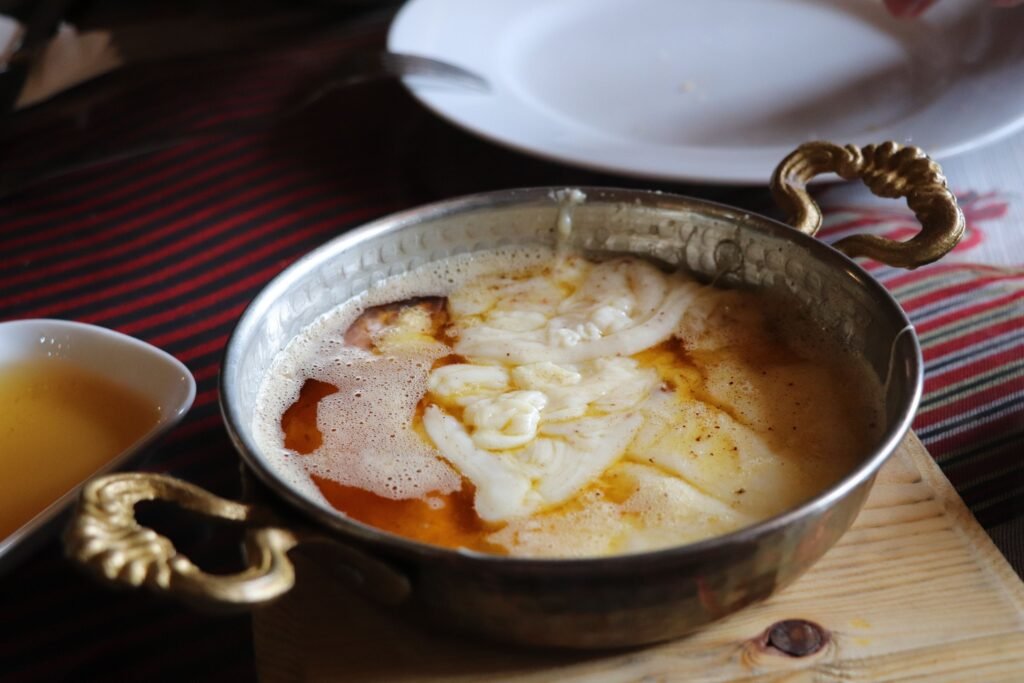

Cyprus halloumi is one of the Mediterranean island’s best-known foods. This firm, brined cheese has a salty flavor, a springy texture, and a high melting point, so it works well grilled, pan-fried, baked, or served fresh.
What Is Cyprus Halloumi?
Traditional halloumi is commonly made with sheep’s and goat’s milk, although modern versions may also include cow’s milk. Producers fold the cheese during preparation, creating its layered texture, and then brine it for a savory taste and longer keeping quality.
Why Is Halloumi Easy to Grill?
Unlike many soft cheeses, halloumi holds its shape when heated. Cook thick slices on a hot grill or skillet until both sides develop a golden-brown crust. The center becomes warm and tender while remaining pleasantly chewy.
How to Serve Halloumi
Serve grilled halloumi with lemon, fresh mint, tomatoes, cucumber, olives, or watermelon. It also works well in salads, wraps, skewers, vegetarian breakfasts, and grain bowls. Pat the cheese dry before cooking, and skip extra salt because halloumi is already brined.
Halloumi in Mediterranean Cuisine
Halloumi reflects Cyprus’s practical, communal food culture. It can be served as a starter, side dish, meat-free main course, or salad topping. Its crisp exterior and pleasantly chewy center make it popular around the world.
Frequently Asked Questions
Can halloumi be eaten without cooking?
Yes. Halloumi can be served fresh, although grilling or pan-frying brings out its flavor and creates a golden crust.
How can you reduce halloumi’s saltiness?
Soak slices briefly in cool water to soften the salty flavor. Pat them dry thoroughly before cooking.