1st Choosing the Right Chicken Cuts and Preparing Them Properly for Juicy, Flavorful Tandoori Chicken
I have observed that For tandoori chicken, bone-in pieces such as thighs and drumsticks work best because they retain moisture and cook evenly. Avoid using chicken breasts alone, they dry out easily. Clean and pat dry the pieces to ensure the marinade adheres properly. Scoring the meat lightly allows the marinade to penetrate deeply, ensuring every bite is flavorful. The quality of chicken and initial preparation directly impacts juiciness and tenderness.
Preparing a Balanced Yogurt-Based Marinade With Spices to Achieve Deep Color and Complex Flavor
This marinating process combines thick yogurt with ginger-garlic paste, Kashmiri red chili powder for color, turmeric for subtle warmth, garam masala, cumin, coriander powder, lemon juice, and salt. Optional smoked paprika or food-grade red coloring can enhance the visual appeal. Marinate the chicken for at least 4–6 hours, ideally overnight, to allow the proteins to tenderize and the spices to fully infuse. Rushing this step produces bland chicken with uneven spice penetration. This is one of the most satisfying step because when i see it after its done, its a complete joy for a chef like me.
Achieving the Signature Tandoori Flavor Through Proper High-Heat Cooking, Smoky Notes, and Caramelization
Traditional tandoori chicken is cooked in a clay tandoor, giving it a smoky, charred aroma. At home, you can replicate this by using a hot oven, grill, or cast-iron pan. Preheat to high heat and cook the chicken on a wire rack so air circulates and excess marinade drips away. Turn the pieces occasionally for even cooking. Avoid low heat; slow cooking without high temperature prevents caramelization, leaving the chicken pale and lacking that tandoori depth.
Basting With Butter or Oil During Cooking to Maintain Moisture and Enhance Flavor
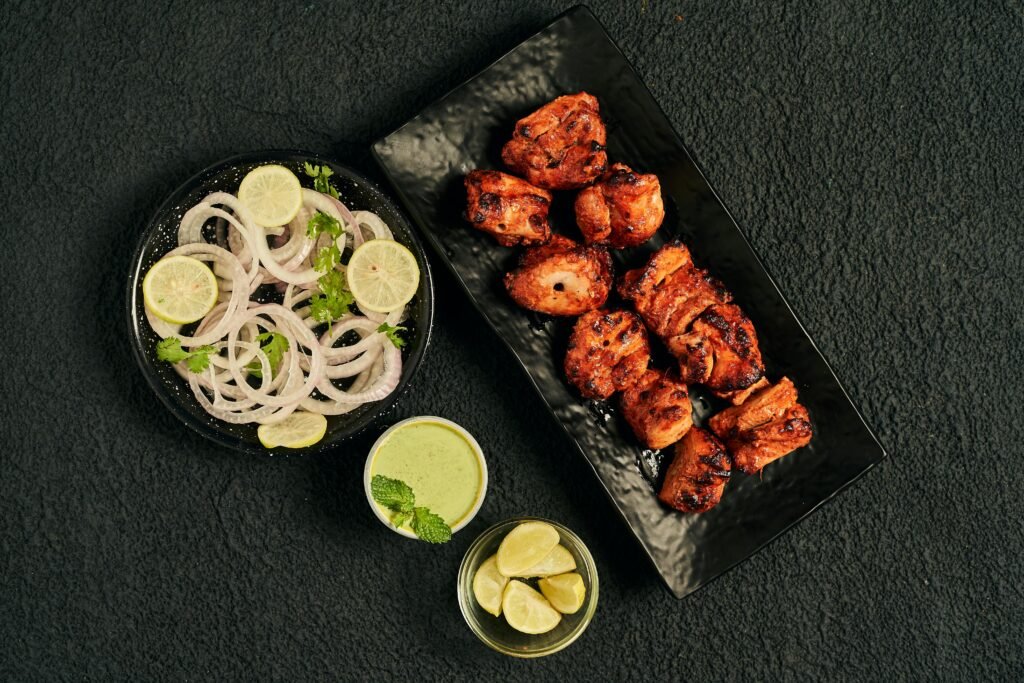
During grilling, lightly brush the chicken with melted butter or ghee. This adds richness, prevents drying, and encourages browning on the exterior. The glossy, slightly crisp skin and smoky aroma are hallmarks of well-prepared tandoori chicken. Omitting this step can result in a dry, dull-textured dish.
Final Seasoning and Garnishing With Lemon, Fresh Coriander, and Optional Onions for Complete Presentation
After cooking, rest the chicken for a few minutes to lock in juices. Sprinkle freshly chopped coriander and a squeeze of lemon for brightness and contrast. Serve with thinly sliced onions and green chutney for authentic Indian street-style presentation. The combination of smoky, spicy chicken with tangy lemon and fresh herbs creates layers of flavor that define professional-grade tandoori chicken.
Serving Recommendations for Maximum Enjoyment and Authenticity
Serve hot as an appetizer, with naan, roti, or steamed rice. For a restaurant-style experience, pair with mint-yogurt raita. The exterior should be slightly crisp, the interior tender and juicy, with a smoky undertone — anything less signals shortcuts or improper marination and cooking techniques. Mastery lies in balancing heat, spice, and timing while respecting the marination and grilling process.