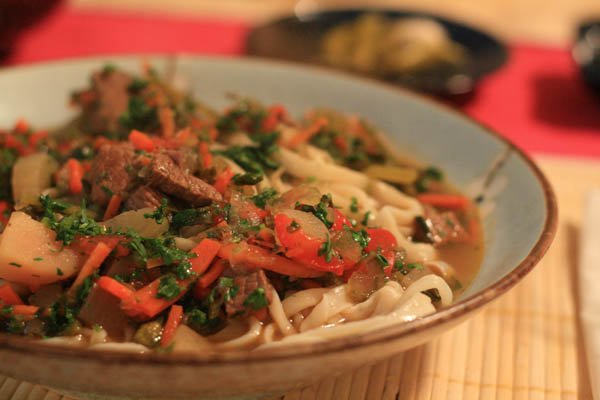
If you love noodle dishes with deep flavor and comforting warmth, Lagman is a meal worth discovering. This iconic Central Asian dish combines chewy noodles, tender meat, and a colorful vegetable sauce simmered with aromatic spices. It’s hearty, satisfying, and perfect for anyone who enjoys bold yet balanced flavors.
Lagman is more than just noodles—it’s a dish rooted in tradition, often prepared for family gatherings and special occasions. With this recipe, you can recreate that authentic taste right in your own kitchen.
What Is Lagman?
Lagman is a traditional Central Asian noodle dish, especially popular in Uyghur, Uzbek, Kazakh, and Kyrgyz cuisines. It typically features hand-pulled noodles served with a savory stir-fried sauce made from meat, vegetables, and spices. Depending on the region, lagman can be served slightly soupy or thick and saucy.
Ingredients for Homemade Lagman
For the Noodles (or use fresh wheat noodles)
-
2 cups all-purpose flour
-
1/2 teaspoon salt
-
About 3/4 cup water
For the Sauce
-
300 g beef or lamb, thinly sliced
-
2 tablespoons vegetable oil
-
1 onion, sliced
-
2 cloves garlic, minced
-
1 bell pepper, sliced
-
1 carrot, julienned
-
1 tomato, chopped (or 1/2 cup crushed tomatoes)
-
1 tablespoon tomato paste
-
1 teaspoon ground cumin
-
1/2 teaspoon black pepper
-
Salt to taste
-
2 cups water or light broth
Optional Add-Ins
-
Green beans, cabbage, or radish
-
Fresh cilantro or green onions for garnish
How to Make Lagman Step by Step
1. Prepare the Noodles
Mix flour and salt, then add water gradually to form a soft dough. Knead well until smooth. Cover and rest for 30–40 minutes. Roll, stretch, and pull the dough into long noodles. Boil in salted water until tender, then drain.
2. Cook the Meat
Heat oil in a large pan or wok over medium-high heat. Add sliced meat and cook until browned.
3. Build the Flavor Base
Add onion and garlic, sauté until fragrant. Stir in cumin and black pepper for warmth and depth.
4. Add Vegetables and Sauce
Add carrots, bell peppers, and tomatoes. Stir in tomato paste and cook for a few minutes. Pour in water or broth, season with salt, and simmer until vegetables are tender and the sauce thickens slightly.
5. Assemble the Dish
Place cooked noodles in bowls and ladle the hot sauce over the top. Garnish with fresh herbs if desired.
Tips for the Best Lagman
-
Use fresh noodles for authentic texture
-
Slice meat thinly for tenderness
-
Simmer sauce gently to develop flavor
-
Adjust thickness with more or less broth
Popular Lagman Variations
-
Uyghur Lagman: Bold spices and hand-pulled noodles
-
Uzbek Lagman: Thicker sauce with more vegetables
-
Soupy Lagman: Extra broth for a comforting noodle soup
-
Vegetarian Lagman: Replace meat with mushrooms or tofu
Why Lagman Is Gaining Global Popularity
Lagman stands out because it offers the comfort of noodles with the richness of a stew. Its colorful presentation, aromatic sauce, and satisfying texture make it highly appealing for food lovers exploring global cuisine—ideal for Google Discover and recipe-focused content platforms.
Frequently Asked Questions
Can I use store-bought noodles?
Yes. Fresh wheat noodles or thick spaghetti can be used as a substitute.
Is lagman spicy?
Traditionally mild, but you can add chili paste or fresh peppers if desired.
Can lagman be prepared ahead of time?
The sauce can be made in advance; cook noodles fresh for best results.
Final Thoughts
This authentic lagman recipe brings together tradition, flavor, and comfort in one bowl. Whether served soupy or thick, lagman is a satisfying meal that works equally well for weeknight dinners or special gatherings.
If you’re looking to expand your home cooking with globally loved dishes, lagman is a delicious place to start.