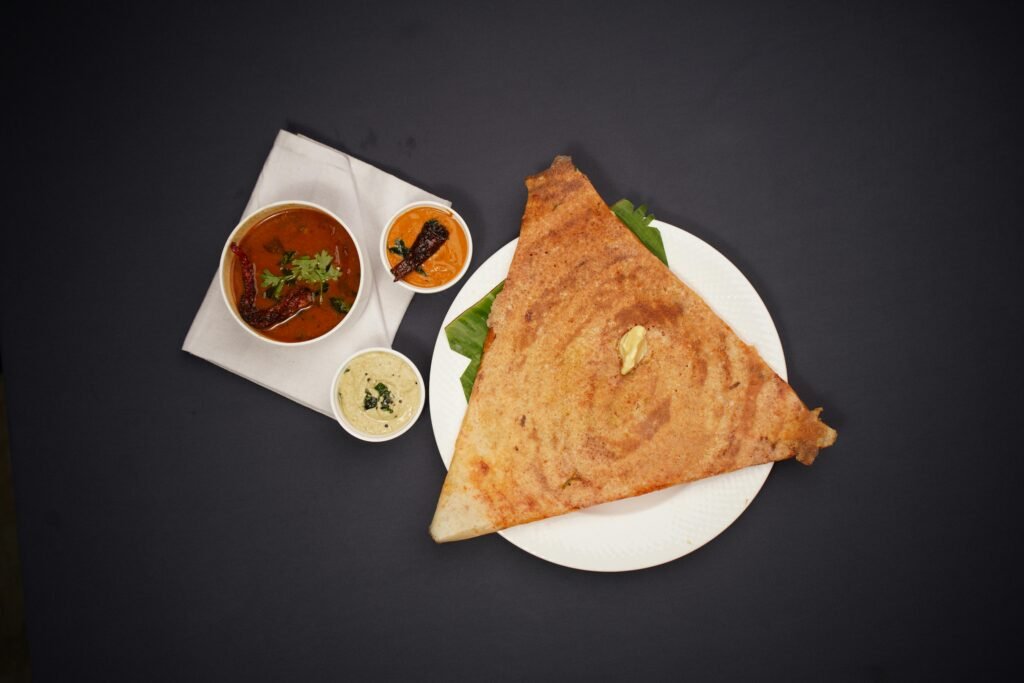
A good masala dosa is unforgiving. Either you execute the fermentation, the batter ratio, and the potato filling with discipline, or you end up with a floppy, pale crepe pretending to be South Indian cuisine. This is the version that gives you the crisp shell, the clean sour note, and a filling that isn’t a bland mashed-potato dump.
Ingredients (Makes 10–12 dosas)
For the dosa batter:
- Parboiled rice: 2 cups
- Raw rice: 1 cup
- Whole urad dal: 1 cup
- Fenugreek seeds: ½ tsp
- Poha (flattened rice): ½ cup
- Salt: to taste
- Water: as needed
- Oil or ghee: for cooking
For the masala filling:
- Potatoes: 4 large, boiled and cubed
- Onion: 1 large, thinly sliced
- Green chilies: 2–3, slit
- Ginger: 1-inch, finely chopped
- Mustard seeds: 1 tsp
- Chana dal: 1 tbsp
- Urad dal: 1 tbsp
- Curry leaves: 10–12
- Turmeric: ½ tsp
- Salt: to taste
- Oil: 2 tbsp
- Fresh coriander: handful, chopped
- Lemon juice: 1–2 tsp
1. Build the batter properly — shortcuts kill dosa.
Rinse the rice varieties together and the urad dal separately. Soak both for at least 4 hours; add fenugreek seeds to the dal. When soaking is done, grind urad dal first with minimal water until it becomes light, fluffy, and almost airy — this step is non-negotiable.
Then grind the rice and poha to a slightly coarse texture. Combine both pastes, add salt, and mix vigorously to incorporate air. Your batter should be thick but pourable, not watery.
Cover and ferment 8–12 hours depending on climate. A properly fermented batter smells mildly tangy and has visible bubbles. If it smells alcoholic or aggressively sour, you let it go too far.
2. Prepare the masala without turning it into baby food.
Heat oil in a pan. Add mustard seeds; when they pop, add chana dal and urad dal. They should turn golden, not burnt. Add ginger, chilies, curry leaves, and onions. Sauté until onions soften but don’t caramelize — this dish isn’t about sweetness.
Add turmeric, salt, and potatoes. Mix gently; don’t mash into paste. Finish with lemon juice and coriander. The filling should be bright, savory, and textured.
3. Get the dosa texture right — this is where most people fail.
Heat a heavy cast-iron tawa or a thick nonstick one. It must be hot enough that a few drops of water sizzle instantly but not so hot the batter seizes. Pour a ladle of batter in the center and spread it outward in one confident, continuous spiral. Hesitation leads to thick, uneven patches.
Drizzle oil around the edges. Let it cook undisturbed until the bottom turns golden and crisp. You do not need to flip it for traditional masala dosa — flipping is a sign you didn’t trust your heat.
Place a portion of the potato masala in the center, fold the dosa, and lift it off the tawa gently so you don’t crack the crust.
4. Serve immediately.
A dosa loses its crispness within minutes. Pair with coconut chutney and sambar. If it’s not crackling when tapped, you didn’t cook it hot enough or your batter fermentation was weak.