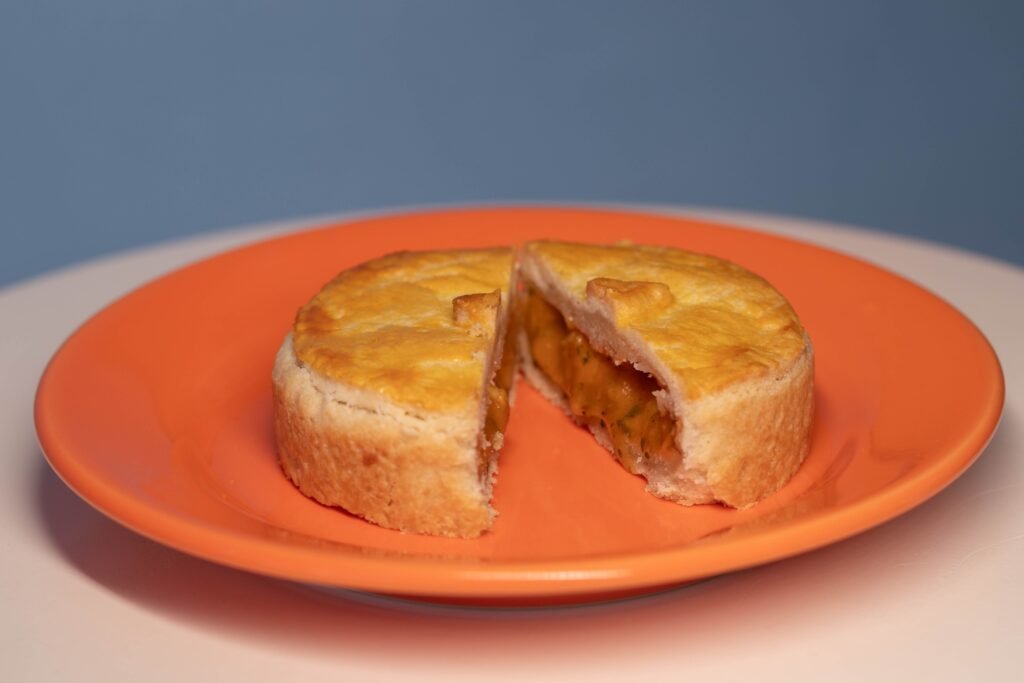
The Australian meat pie is small enough to hold in one hand, yet satisfying enough to represent an entire food culture. Encased in crisp pastry and filled with rich minced meat gravy, it is a practical, comforting, and unmistakably Australian favorite.
What makes an Australian meat pie special?
The classic pie combines a sturdy pastry base with a tender filling of minced beef, onion, stock, and savory seasonings. A flaky pastry lid finishes the top, creating the contrast that makes the first bite so enjoyable: crisp pastry gives way to warm, glossy gravy and richly seasoned meat.
Good filling should be flavorful but not watery. It needs enough body to stay inside the pastry when the pie is cut or bitten, while remaining soft and succulent. Pepper, herbs, tomato, Worcestershire-style seasoning, or other additions may be used depending on the recipe.
A food made for real life
Part of the meat pie’s appeal is convenience. It can be eaten at a sporting event, picked up from a bakery, served at a casual gathering, or enjoyed as a simple dinner. It travels well, feels substantial, and does not require a formal table setting.
That practicality helped make the pie a familiar part of Australian life. It is comfort food without unnecessary ceremony. The warmth of the filling and the smell of baked pastry can make an ordinary break feel like a proper meal.
The pastry matters
Pastry is not just packaging. The base needs enough strength to support the filling, while the lid should bake into crisp, golden layers. Chilling the pastry before baking can help it hold its shape, and allowing the filling to cool slightly before assembly can reduce the chance of a soggy crust.
The best pies are balanced. Too much pastry can hide the filling, while too little can make the pie difficult to handle. A well-made version gives you a little crunch, a generous spoonful of gravy, and a rich finish in every bite.
How it is commonly served
Tomato sauce is the classic companion. Its sweetness and acidity cut through the richness of the meat and pastry. Some people enjoy a pie with peas, mashed potatoes, or a simple salad, while others prefer to eat it on its own.
Temperature matters too. The pie should be hot enough to feel comforting, but not so hot that the filling overwhelms the pastry or burns the mouth. Letting it rest briefly after baking helps the gravy settle and makes it easier to enjoy.
Why Australians love it
The meat pie is connected to many settings: bakery counters, football grounds, road trips, school lunches, and family kitchens. It belongs equally to everyday routines and nostalgic memories. Its popularity comes from a combination of flavor, affordability, and familiarity.
There is also room for variation. Modern versions may use slow-cooked beef, mushrooms, lamb, pepper sauces, or vegetarian fillings. Even when the ingredients change, the central idea remains: a warm savory filling protected by golden pastry.
Making a better pie at home
For a homemade version, take time to develop flavor in the filling. Brown the meat properly, soften the onion, season gradually, and simmer until the gravy thickens. Do not rush the cooling step before adding the filling to the pastry. A stable filling is easier to portion and gives the crust a better chance to stay crisp.
Cut a small vent in the lid so steam can escape, brush the pastry with egg for color, and bake until deeply golden. Serve with tomato sauce and enjoy it while the contrast between crisp pastry and rich filling is at its best.
More than a snack
It is easy to call the Australian meat pie a snack because of its size, but that undersells it. A well-filled pie is a complete expression of comfort: savory meat, gravy, pastry, warmth, and a sense of familiarity. It is the kind of food people remember not because it is complicated, but because it reliably delivers satisfaction.
Final thought
The Australian meat pie has earned its iconic status through consistency and character. It is portable, hearty, adaptable, and deeply tied to everyday Australian life. Whether bought from a bakery or made at home, it proves that humble ingredients can create a food tradition with a remarkably lasting appeal.