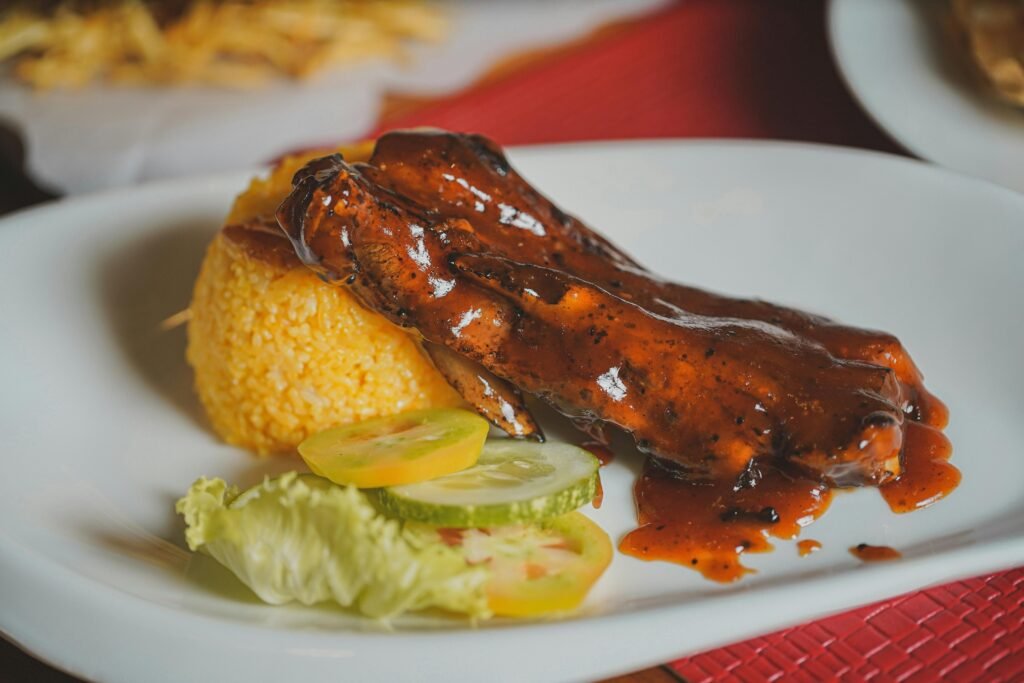
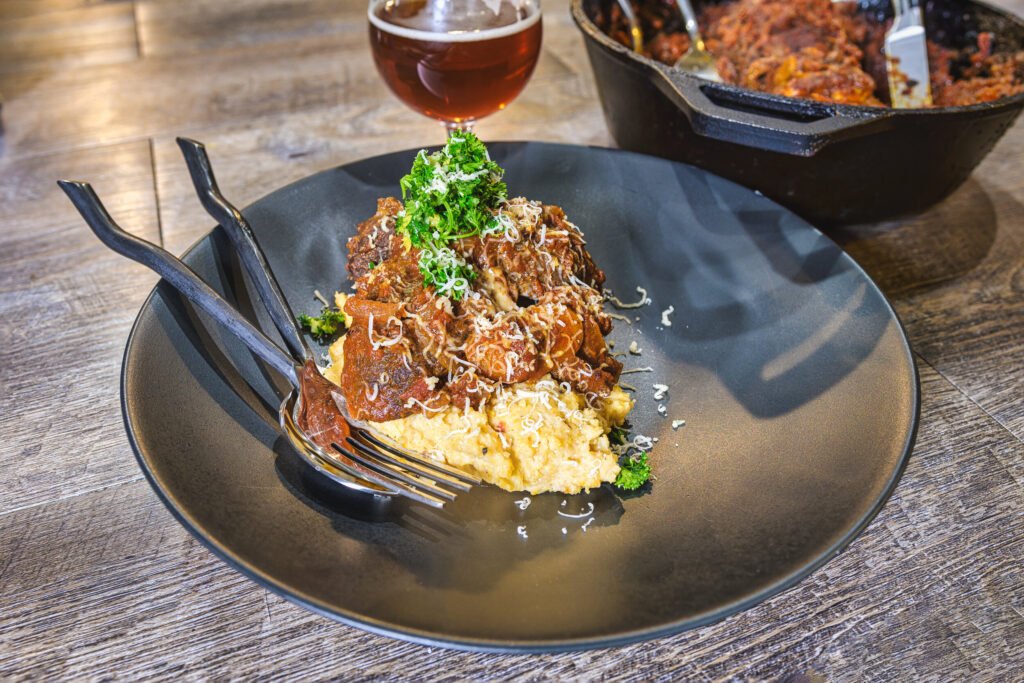
Osso Buco is one of Italy’s most iconic comfort dishes—a slow-braised veal shank cooked until fork-tender, bathed in a deeply aromatic sauce, and traditionally finished with a bright gremolata. Originating from Milan, Osso Buco alla Milanese is not fast food, not weeknight food, and definitely not “throw-it-together” food. It’s a dish about time, balance, and restraint.
When done right, Osso Buco delivers gelatin-rich meat that falls apart effortlessly, a sauce with body and elegance, and marrow that is rich without being greasy. This recipe walks you through every detail so you don’t butcher a classic.
What Is Osso Buco?
“Osso buco” literally means “bone with a hole” in Italian, referring to the cross-cut veal shank with marrow at the center. The dish is braised slowly with vegetables, wine, and stock until the collagen melts into the sauce.
Traditional Osso Buco is:
Made with veal shanks
Braised, not boiled
Finished with gremolata
Served with risotto alla Milanese or polenta
Anything else is a variation—some good, some wrong.
Ingredients
For the Osso Buco
4 veal shanks (1½–2 inches thick, tied with kitchen twine)
Salt and freshly ground black pepper
½ cup all-purpose flour (for dredging)
3 tbsp olive oil
2 tbsp butter
1 onion, finely diced
1 carrot, finely diced
1 celery stalk, finely diced
4 cloves garlic, minced
1 cup dry white wine
1½ cups veal stock or beef stock
1 can (14 oz) crushed tomatoes (optional but common)
2 bay leaves
2 sprigs fresh thyme
Zest of 1 lemon (optional, for brightness)
For the Gremolata (Non-Negotiable)
Zest of 1 lemon
2 cloves garlic, finely minced
3 tbsp fresh parsley, finely chopped
Step-by-Step Instructions
1. Prepare the Veal Properly
Pat the veal shanks dry. Season aggressively with salt and pepper. Lightly dredge them in flour and shake off excess. This step isn’t about thick coating—it’s about browning and sauce structure.
Tie each shank around the edge with kitchen twine to prevent them from collapsing during cooking. Skip this and your dish will look sloppy.
2. Sear Like You Mean It
Heat olive oil and butter in a heavy Dutch oven over medium-high heat.
Sear the veal shanks until deep golden brown on all sides—about 4–5 minutes per side. Do not rush this. Browning = flavor. Pale meat equals a weak sauce.
Remove shanks and set aside.
3. Build the Flavor Base (Soffritto)
In the same pot, lower heat to medium and add onion, carrot, and celery. Cook slowly for 8–10 minutes until soft and lightly caramelized. This is your foundation.
Add garlic and cook for 30 seconds—no burning.
4. Deglaze and Reduce
Pour in the white wine and scrape the bottom of the pot thoroughly. Let it simmer until reduced by half. This step burns off alcohol and concentrates flavor.
Skip reduction and your sauce will taste sharp and thin.
5. Braise Low and Slow
Return veal shanks to the pot. Add stock, crushed tomatoes (if using), bay leaves, thyme, and lemon zest.
Liquid should come halfway up the meat, not drown it.
Cover and cook:
Oven method (preferred): 325°F (165°C) for 2–2½ hours
Stovetop: Gentle simmer, partially covered, same time
Turn shanks once halfway through.
You’re done when the meat is fork-tender and barely holding together.
6. Make the Gremolata
Mix lemon zest, garlic, and parsley just before serving. This is not garnish—it’s balance. Osso Buco without gremolata is heavy and flat.
Serving Suggestions
Classic pairings:
Risotto alla Milanese (traditional)
Creamy polenta
Mashed potatoes
Buttered tagliatelle
Spoon sauce generously over the meat and finish with gremolata on top.
Pro Tips (Read These or Regret It)
Veal shanks > beef shanks: Beef works, but veal is silkier and traditional.
Do not over-thicken the sauce: The gelatin does the work.
Never skip gremolata: It cuts richness and wakes the dish up.
Rest before serving: 10 minutes improves texture and flavor.
Nutritional Information (Approximate, per serving)
Calories: 520–580 kcal
Protein: 45 g
Fat: 28 g
Carbohydrates: 15 g
Collagen-rich, nutrient-dense, deeply satisfying
FAQs About Osso Buco
Q1: Can I make Osso Buco without veal?
Yes, beef shanks are a common substitute, but the texture will be firmer and the flavor heavier.
Q2: Is tomato traditional in Osso Buco?
In Milanese-style, tomatoes are minimal or absent. Both versions are accepted.
Q3: Can I make Osso Buco in advance?
Yes—and it’s better the next day. Cool, refrigerate, and reheat gently.
Q4: Can I freeze Osso Buco?
Absolutely. Freeze without gremolata for up to 2 months.
Q5: Why is my meat tough?
You rushed it. Collagen needs time to break down. Low heat, long cook.
Final Thought
Osso Buco is not flashy food. It’s serious cooking. It rewards patience, discipline, and respect for technique. Master this dish and you’ve proven you understand slow cooking at a fundamental level.