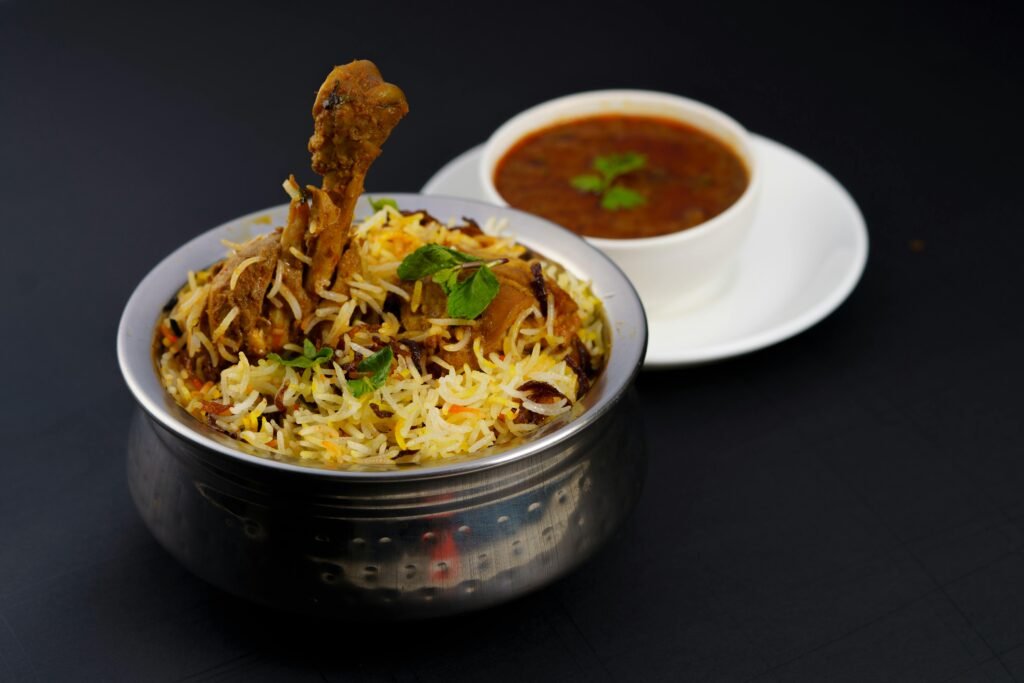
Hyderabadi biryani isn’t just a dish; it’s a test of discipline, sequencing, and respect for technique. Done right, it rewards you with aroma, clarity of flavor, and long, separate grains. Done wrong, you get a heavy, wet rice-meat mash. Here’s the version that actually works, without the usual shortcuts that ruin it.
Ingredients (Serves 4–5)
For the meat marinade:
- Chicken: 1 kg, bone-in pieces
- Yogurt: 1 cup, full-fat
- Ginger-garlic paste: 3 tbsp
- Green chilies: 4–6, slit
- Fried onions (birista): 1 cup, crushed
- Red chili powder: 1.5 tbsp
- Turmeric: ½ tsp
- Garam masala: 1 tsp
- Coriander powder: 1 tbsp
- Mint leaves: ¾ cup
- Fresh coriander: ¾ cup
- Lemon juice: 2 tbsp
- Salt to taste
- Oil or ghee: 4 tbsp
- Optional: saffron strands soaked in 3 tbsp warm milk
For the rice:
- Basmati (long-grain, aged): 3 cups
- Whole spices: 4 cloves, 4 green cardamom, 1 bay leaf, 1 small cinnamon stick
- Salt for boiling
- Ghee: 1 tbsp
Preparation
1. Marinate properly — not that quick 20-minute nonsense.
Combine all marinade ingredients into a heavy bowl. Coat the chicken thoroughly, making sure the yogurt and fried onions cling to every surface. Cover and refrigerate for at least 2 hours, but overnight is vastly better. This step builds depth—rushing it guarantees mediocre biryani.
2. Prepare the rice with precision.
Rinse basmati until water runs clear, then soak it for 30 minutes. Bring a large pot of water to a full rolling boil with ghee and the whole spices. Add enough salt so the water tastes like mild soup—this ensures the final rice has seasoning. Add rice and cook until it’s 70% done: long, firm, still slightly resistant in the center. Drain immediately. If you overcook here, there’s no recovery.
3. Assemble the dum (layering).
Use a heavy, wide-bottomed pot. Spread the marinated chicken across the base—raw, not pre-cooked. That’s the Hyderabadi approach. Scatter a small handful of fried onions, mint, and coriander. Layer the parboiled rice on top in an even bed. Do not mix.
Drizzle the saffron milk over the rice, if using. Add 2–3 tablespoons of ghee over the top. Seal the pot with dough or foil and press the lid tightly to trap steam.
4. The dum cooking — where people usually mess up.
Set the pot over medium flame for 8–10 minutes to generate steam. Then reduce to low and cook for 30–40 minutes. You’re aiming for the chicken to cook in its own juice, releasing moisture upward, which the rice absorbs. This is what creates the signature layered flavor instead of a flat, uniform taste.
If you smell burning early, your flame is too high or your pot is too thin.
5. Resting and serving.
Turn off the heat and let the biryani rest for 10 minutes before opening. Fluff gently from the sides, lifting rice and meat together without breaking the grains.
Serve with raita, boiled eggs, or just by itself. A proper biryani never needs correction sauces—it stands on its own.